
An on-site fleet fueling system, meaning your own storage tank and dispenser, gives you fuel around the clock and lets you buy in larger drops. In Ontario it also makes your yard a private outlet under the Liquid Fuels regulation. Private outlets do not need a TSSA licence, but they must meet the Liquid Fuels Handling Code, use approved equipment, and have installation and servicing done by registered contractors and certified technicians. Spills and leaks must be reported. The tank is the smallest part of the commitment: the lasting work is fuel control, maintenance and spill readiness, for as long as the tank is there. Ownership makes sense for high, steady volumes and around-the-clock dispensing. For most fleets whose vehicles are parked overnight, scheduled delivery or a portable unit gets the same result without the liability.
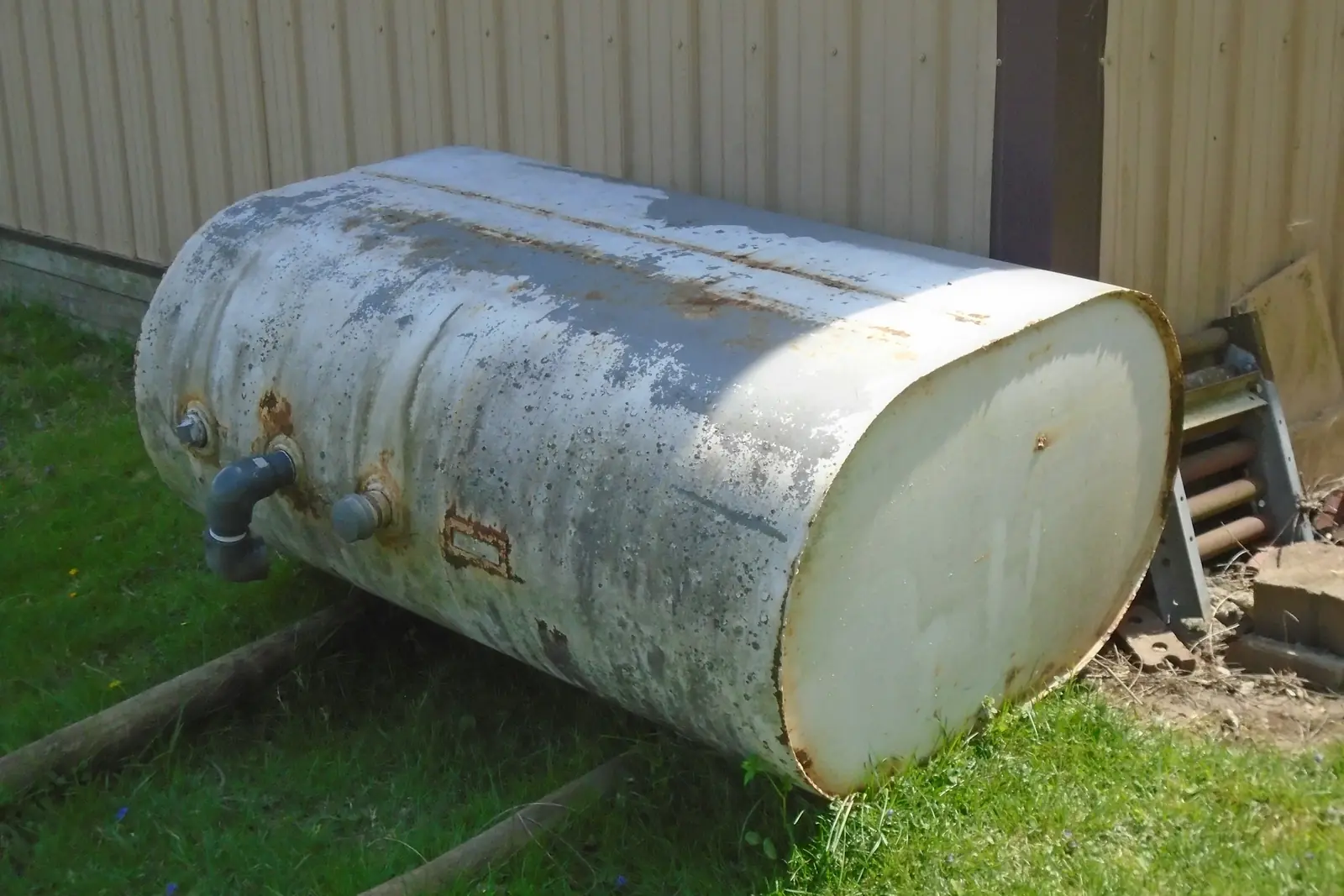
A permanent on-site system is a storage tank, usually aboveground in a commercial yard, connected to a dispenser that your drivers use themselves. Better systems add a key, card or PIN control that records which vehicle took how much. A supplier refills the tank when it runs down.
The appeal is easy to see: fuel at three in the morning, larger deliveries, and no dependence on anyone else's schedule. Those benefits are real. They also come with obligations that are easy to underestimate at the quote stage, when the conversation is mostly about the tank.
Fuel storage and dispensing in Ontario falls under Ontario Regulation 217/01, the Liquid Fuels regulation made under the Technical Standards and Safety Act. It defines a private outlet as any premises, other than a retail outlet, where gasoline or an associated product is put into the fuel tanks of motor vehicles or into portable containers. Diesel counts as an associated product, and a farm with its own fuel tank is treated as a private outlet too. In practice, that means:

None of this is unusual or unreasonable. It is work, and with an owned tank it lands on you rather than on a supplier. Your insurer, your landlord and your municipality may add requirements of their own, so ask each of them before you commit.
Quotes for a fuel system focus on the tank, the dispenser and the installation. The costs that decide whether it pays off come later, and none of them are optional.
A tank in the yard is fuel that anyone with access can take. Without a dispenser control system that ties each draw to a vehicle and a person, shrinkage is hard to see and harder to prove. With one, someone has to manage the keys or PINs, reconcile the data and chase the gaps. That is the same administrative load that makes fuel cards expensive, moved into your own yard.
Tanks, piping, hoses, nozzles, filters and dispensers all wear, and water can collect in a diesel tank through condensation. Work on the equipment has to be done by registered, certified people, and it has to be paid for whether the tank is busy that month or not.
You need a spill kit, a written plan and people on site who know what to do with both, including who makes the reporting calls. A delivery supplier carries that responsibility on every visit. With your own tank, it is yours every day.
Owning a tank does not remove the need for a supplier. It changes what you buy from them. Someone still has to deliver into the tank, and you are now the one responsible for ordering before it runs dry. If you do own storage, Bulk Diesel Delivery in Ontario covers how tank deliveries are priced and scheduled.
Eventually the tank has to be emptied, removed and disposed of by a registered contractor, and the ground around it may need to be checked. That cost is easy to forget, because it arrives years after the decision to buy.
There are three realistic ways to keep a fleet fuelled on site. They trade control against responsibility in different proportions.
| Own tank and dispenser | Scheduled delivery | Portable on-site unit | |
|---|---|---|---|
| Upfront spend | Tank, dispenser, installation and site work | None | Set by the supply agreement |
| When fuel is available | Around the clock | At each scheduled visit | Around the clock, between refills |
| Who looks after the equipment | You, through registered contractors | The supplier | The supplier |
| Code compliance for storage | You | No storage on your site | The supplier |
| Fuel records | Your own dispenser system | Every fill logged against a unit number | Every refill logged by the supplier |
| Best suited to | High, steady volume with fuelling at all hours | Vehicles parked overnight in one place | Off-shift equipment and temporary sites |
The middle column is how on-site fueling works for most fleets: the vehicles are filled where they are parked and there is no storage to own. The right-hand column is Refuel Mobile's portable on-site unit, available in every area it serves, for operations that need fuel on hand between visits.
A permanent system earns its keep when most of the following are true:
If that describes you, a permanent system can be the right call, and delivery into your tank keeps it supplied. If your vehicles are parked overnight in the same place, the case gets much weaker. The main thing a tank buys you is fuel on demand, and you do not need fuel on demand when every vehicle can simply be filled while it sits.
The last question usually settles it. Our fleet fuel delivery page and fuel savings calculator are good places to start that comparison.
Compare Delivery With Owning a Tank - Talk to Our Team
Service areas: we deliver across twelve Ontario cities, including Richmond Hill, Thornhill and Mississauga. Tell us your yard location and we will confirm coverage.

A better way to get fuel.


© Copyright 2026 ReFuel Mobile™. All Rights Reserved.