
Ontario construction companies are eliminating fuel station runs by replacing labourer-driven jerry-can trips with scheduled on-site fuel delivery. A typical mid-sized GTA site running an excavator, two skid steers, a light tower, and a generator loses 4 to 6 hours of labour and 2 to 4 hours of equipment time per week to off-site fueling. On-site delivery collapses that to zero. For a 26-week project, the recovered labour and equipment time alone typically clears $8,000 to $20,000 before fuel cost is even discussed.
This post explains the math, walks through how on-site delivery actually works, lists the equipment we fuel, and shows what a typical project looks like once the fuel-runs go away.
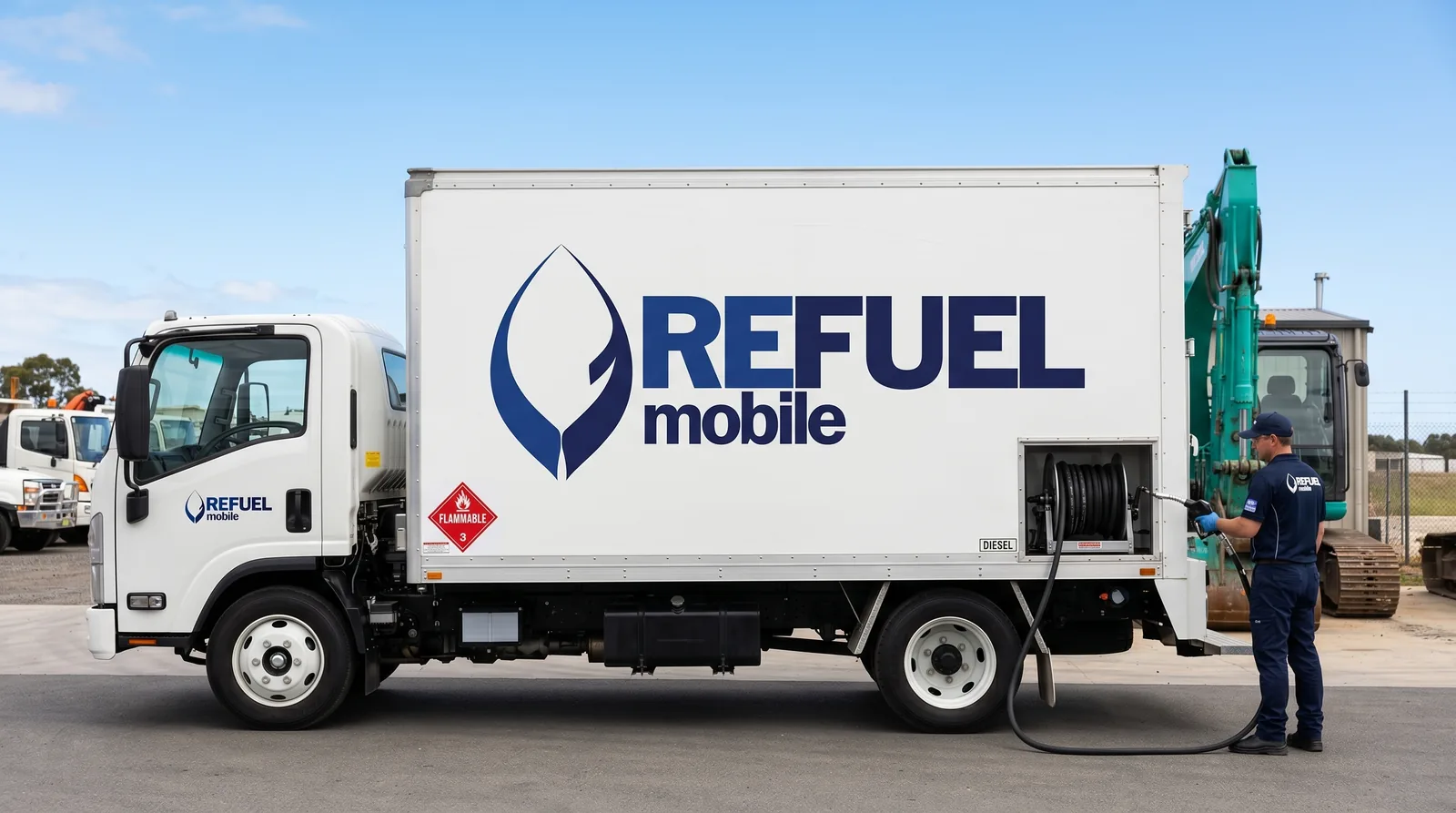
Most site superintendents know fuel runs cost time. Most do not know how much.
A typical mid-sized Ontario construction site running yellow iron and gen-set load fuels 3 to 5 times per week through one of the three usual methods: a labourer driving a company pickup with jerry cans to the nearest station, a crew member gassing up a service truck during their lunch hour, or an emergency callout to a local distributor when the on-site bulk tank runs dry.
The math on the jerry-can workflow alone:
That is the labour cost only. It does not count:
The labour line is the easiest one to see. The equipment-time and schedule-slip costs are the ones that actually decide whether a project clears margin.

The mechanics are simpler than most superintendents expect.
Step 1: Site walk and fuel plan. A delivery operator visits your site (or reviews drawings) and confirms what equipment runs where, expected daily burn rate, and access constraints. From there, you get a recommended cadence (daily, three times a week, weekly, or on-call) and a recommendation on whether a portable on-site bulk unit makes sense for your site duration.
Step 2: Scheduled delivery before crews arrive. TSSA-certified delivery technicians fuel every piece of equipment in place during a designated window. Most sites schedule fueling between 4 AM and 6 AM so equipment is topped off before the first hammer swings. For 24/7 sites (data centers, tunneling, infrastructure projects with continuous gen-set load), windows are scheduled around shift changes.
Step 3: One report per site. Every fill is logged by equipment ID, fuel grade, litre count, and timestamp. One consolidated invoice rolls up multiple sites if you are a GC managing several active builds. Cost-coding by job number is supported, which means your accounting reconciles fuel against project budget without manual receipt entry.
The result for a site superintendent: zero fuel-runs to coordinate, zero jerry-can liability, zero "where is the diesel" calls at 7 AM on a Monday.
The list is broader than most contractors expect. On a typical mid-sized site, on-site delivery fuels:
If it runs diesel, gasoline, or needs DEF, it gets fueled in place. The only equipment that does not fit the model is a vehicle that physically leaves the site every shift (a delivery pickup, a long-haul tractor) — and even those usually fuel at the yard before deployment.
The example below reflects a typical mid-sized GTA infrastructure project and is composed from common Refuel Mobile customer outcomes. Specific project names and figures vary by site.
The site superintendent moved fueling to a 4 AM Monday/Wednesday/Friday delivery cadence with a 1,000-litre MyTank portable unit installed for buffer capacity. DEF was added to the same delivery run.
| Outcome | Before (Jerry Cans) | After (On-Site Delivery) |
|---|---|---|
| Fuel runs per week | 4 | 0 |
| Labourer hours per week on fueling | 5–6 | 0 |
| Total recovered labour hours over project | — | ~140 hours |
| Equipment downtime events (waiting on fuel) |
3
(1 excavator stranded, 1 light tower out for Saturday pour, 1 generator failure on critical-path day) |
0 |
| Per-site invoices to reconcile | ~104 (4/week × 26) | 6 (one per month) |
| Spill incidents | 1 (minor, jerry can) | 0 |
| Estimated recovered margin | — | ~$14,500 (recovered labour + avoided equipment downtime, before fuel cost spread) |
The recovered margin number does not include the per-litre cost difference between jerry-can station-pump fuel and on-site bulk delivery, which on this site added another ~$0.18 per litre savings, or roughly $8,400 over the project.
Total recovered margin across the project: ~$22,900 on a workflow change that took the site superintendent two phone calls to set up.
The economics are not universal. On-site fuel delivery typically wins on:
It does not always win on:
For most Ontario commercial, civil, infrastructure, and demolition sites running longer than 30 days with multiple pieces of equipment, the math works.

If you want the full mechanics — equipment classes, cadence options, MyTank portable unit specs, and Ontario service area — read the Construction Site Fuel Delivery Guide.

A better way to get fuel.


© Copyright 2026 ReFuel Mobile™. All Rights Reserved.